Four names get used as if they were finishes on the same product. They are not. Wet pipe, dry pipe, pre-action and deluge all put water through sprinkler orifices, but they store that water in different places, wait for different signals, and fail in different ways. The choice belongs in the installation and design brief, not in a late fitout meeting.
AS 2118.1 is written around wet pipe unless occupancy or climate makes standing water a problem. The other three types solve freeze risk, water-sensitive contents, or a fire that grows faster than closed heads can control. They cost more to design, install and keep honest under AS 1851. Treat them as tools, not upgrades.
What is a wet pipe sprinkler system?
A wet pipe system is the arrangement most people already stand under. The pipework is full of water, held at pressure by the town main, a tank and pump, or both. Each head is closed by a glass bulb or a fusible link. When the air around a head is hot enough, that one element fails, the orifice opens, and water is already there. There is no valve to trip first and no column of air to push out.
That immediacy is the point. Offices, retail, hospitals, schools, most apartment common areas and heated warehouses run wet pipe because the design fire is a growing contents fire, not a fuel spill, and the building stays above freezing. The alarm valve at the riser is a check valve with trim: a water-motor gong or electric pressure switch, a test facility, and supply and system gauges. Flow through the valve raises the alarm. The rest of the heads stay shut.
Wet pipe is also the easiest system to prove. Weekly and monthly AS 1851 duties are well understood. There is no compressor to nurse, no detection circuit that must agree before water will move, and no open-head manifold waiting on a deluge solenoid. If a contractor proposes anything else for a heated office, ask what problem they are solving.
The limitation is physical. Water in steel or copper will freeze below zero and split a pipe. Water above a painting, a server row or newsprint is a contents problem if a head is broken. Those are jobs for the other three types — not a reason to abandon wet pipe in rooms that do not have those problems.
Why use a dry pipe sprinkler system?
A dry pipe system keeps air or nitrogen in the pipes, held at a supervisory pressure, on the downstream side of a differential dry valve. The heads are still closed. When one head opens, the air blows out through that orifice, pressure on the system side falls, the dry valve clapper lifts, and water floods the pipework toward the open head. Until that air is gone, the fire has a head start.
That delay is why dry pipe is a second choice. Use it where water would freeze and you cannot heat the space: unheated loading docks and canopy soffits, some open-deck car parks in alpine or inland climates, and cool rooms near or below zero that are not deep freezers. A Sydney dock that never sees frost does not need dry pipe. A Canberra dock open to a July night often does.
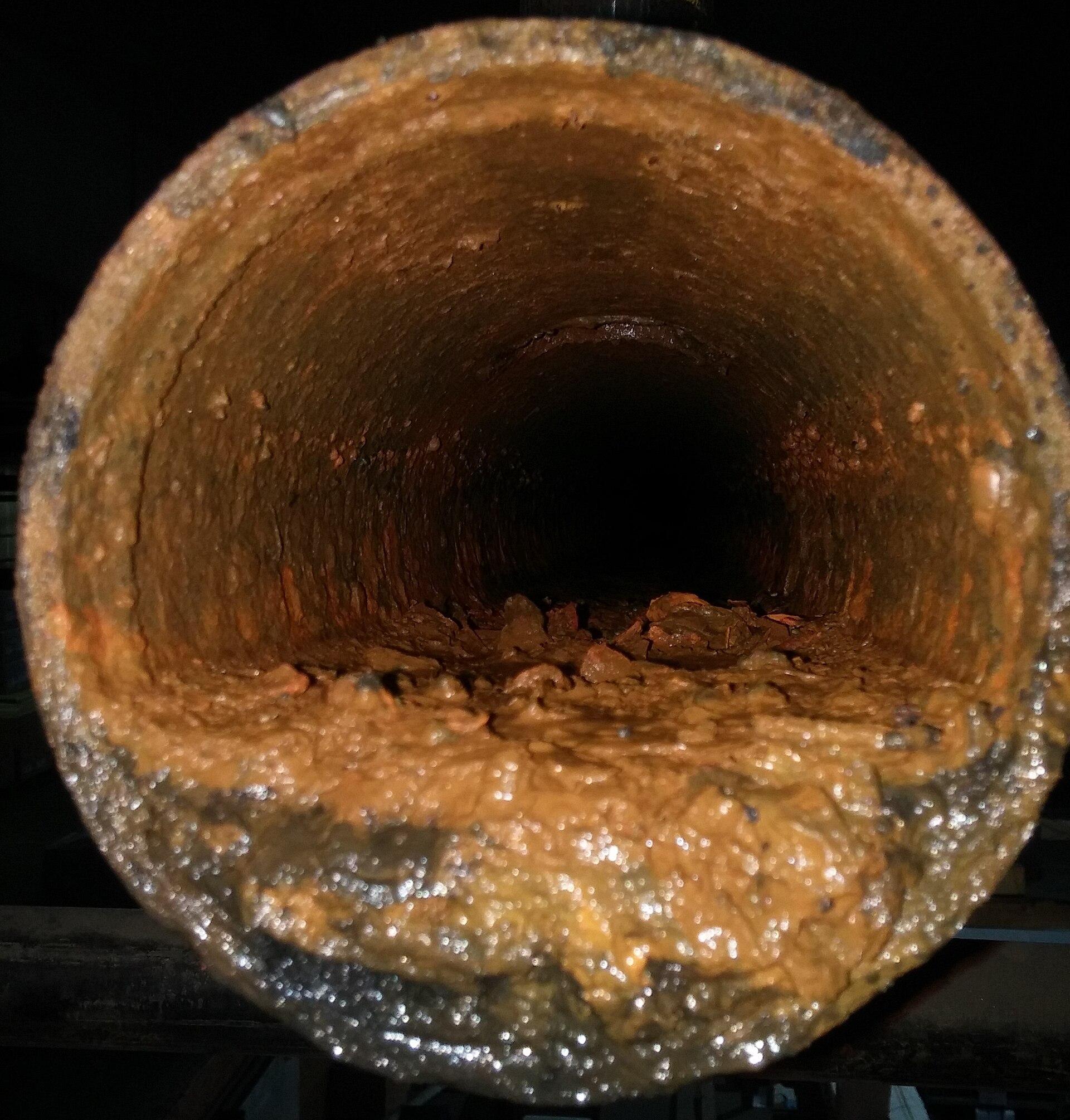
Air maintenance is the part owners underestimate. The system needs a compressor or nitrogen generator, an air-maintenance device that stops over-pressurising the valve, and low- and high-air supervisory switches. Too much air slows the trip. Too little risks a false trip when temperature swings change the pressure. Nitrogen is worth the extra plant: the photograph at the top of this page is a dry-pipe main after years of wet–dry cycling with ordinary air. Oxygen and standing water eat steel from the inside. Nitrogen slows that corrosion; it does not remove the need to pitch and drain.
Antifreeze is not a casual substitute. Short glycol or glycerine loops have been used overseas on small freeze-prone pockets. Treat that idea with caution in Australia. Some historical mixtures burned hotter than the fire they were meant to control, listed premixes are specific about concentration, and spent fluid is a waste problem. Heat-trace, a heated valve room, or a calculated dry system is usually cleaner. If someone proposes antifreeze, ask for the listing, the fill procedure and the disposal route.
Large dry systems can need accelerators that trip the valve on a small pressure drop. They add another failure mode. Keep the dry system as small as the freeze problem requires, and keep the rest of the building wet.
When do pre-action systems make sense in Australia?
A pre-action system looks like a dry system until you read the valve trim. The pipes are normally dry, or at least not charged with water. A separate detection system — smoke, heat, or both — must operate before the pre-action valve opens and fills the pipes. The heads are still closed. Water then waits at each orifice until heat opens a head, the same way a wet system would.
That double condition is why galleries, museums, archives and some data halls specify pre-action. A single broken head should not soak a canvas. The usual Australian conversation is between single-interlock and double-interlock.
Single-interlock opens the valve on detection alone. Once the pipes are wet, any head that later opens will flow immediately. If a head breaks without a fire, air escapes and a supervisory signal should sound, but water should not follow until a detector agrees. Double-interlock waits for both detection and a sprinkler operation. That is the arrangement argued for freezer stores and collections that cannot tolerate an accidental fill. It is also the slowest closed-head type, because water is still behind the valve when the first head opens.
Cold stores need more care than “put it on dry pipe”. A cool room just below zero can often be dry pipe. A freezer at minus twenty is different. Moisture left after a trip becomes ice, and ice plugs stop water reaching the fire. Double-interlock pre-action, nitrogen, pitching to drain points, and a documented dry-out after any fill are the usual package. The water supply still has to meet the demand the moment the valve opens.
Pre-action is not a prestige finish for a lobby. It adds detection interfaces, more valves and a maintenance regime that fails if detector and sprinkler are separate contracts. If the contents are not water-sensitive, wet pipe with listed concealed or recessed heads is the more honest specification.
Do all sprinklers go off with deluge?
Yes — that is the definition, and it is the one case where the film trope is true. Deluge uses open heads. There is no bulb and no fusible link on the orifice. The pipework is dry. A detection system, often linear heat, flame or a dedicated risk detector, opens a deluge valve, and every head on that zone discharges at once.
The fire that justifies this is not a waste-paper bin. Aircraft hangars, some flammable-liquid process areas, transformer yards and a handful of plant-room special hazards grow too fast, or with too much radiant heat, for a closed head to open over the seat of the fire. Hangars often move from water deluge into foam-water deluge so the discharge can float on a fuel spill. Those systems are a hazard in their own right: large flows, large supplies, and a hydraulic calculation that assumes every head is open.
Deluge is a poor answer to an office or a shop. The water damage is certain, the demand is enormous, and the detection must be as reliable as the valve. A false trip empties the tank onto a dry floor. Owners sold “deluge” when they needed wet pipe have usually been sold a word.
Plant rooms sit in the middle. A boiler or fan room with ordinary combustibles is still wet pipe. An oil-filled transformer, diesel generator hall or hydraulic-pack room may need water spray or deluge as a local system, while the rest of the building stays wet. The fire-indicator-panel interface, the deluge solenoid isolation, and weekly proving of the detection are part of the design.
Why wet pipe is the Australian default
Wet pipe wins on the metrics that matter after handover: speed to water, number of things that can fail, cost of routine service, and the record of systems that actually operate. A dry valve, a pre-action solenoid and a deluge trim are extra moving parts between the fire and the water. Each is justified when occupancy creates a problem wet pipe cannot solve. None of them make a building “more protected” in the abstract.
The practical test is short. Is the space kept above freezing? Are the contents ordinary? Is the fire a contents fire rather than a fuel spill or an aircraft? If yes, specify wet pipe and spend the fee on a competent remote-area calculation, an honest water-supply graph, and heads that match the ceiling. If a space fails one of those tests — a dock, a freezer, a gallery store, a hangar — peel it off as its own system type and leave the rest of the building alone.
That also keeps commissioning readable. A wet alarm valve, a dry valve and a deluge skid on the same site can be a clean design. Three types mixed on one floor because someone liked the sound of pre-action is how isolation mistakes start. Name the system type on the block plan, on the valve, and in the owner handbook.